
Fool Me Once….
And None of It Is Love

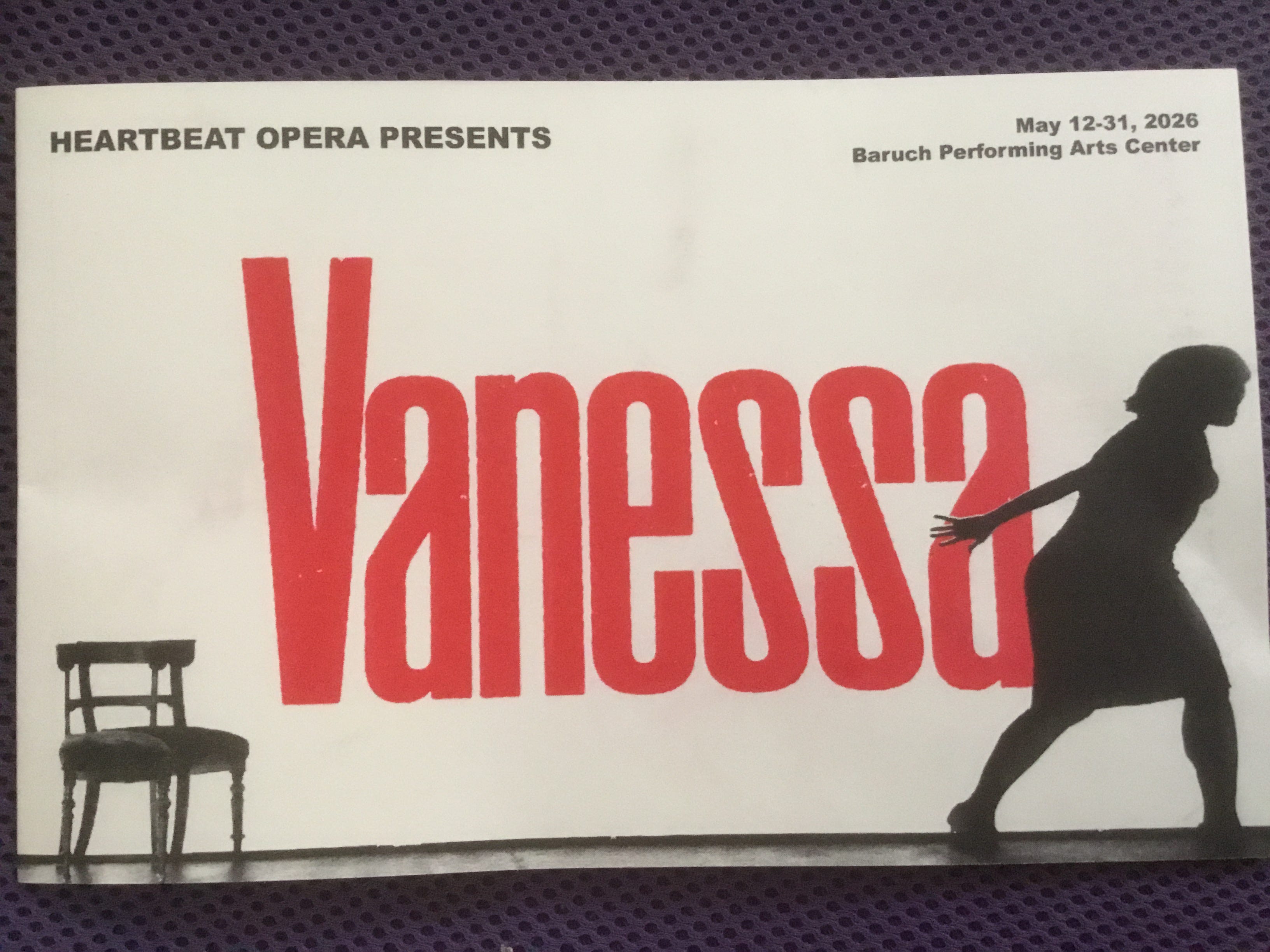
Vanessa
Opera by Samuel Barber
Libretto by Gian Carlo Menotti
Seen at HeartBeat Opera
Baruch Performing Arts Center
May 19, 2026
The shadow of Carl Jung hovers over this imaginative intimate recreation of the original large-scale dinosaur of an opera. The back of the stage is a white wall and the lights catch and project the shadows of the characters, emphasizing the repressed feelings that each can hardly contact consciously.
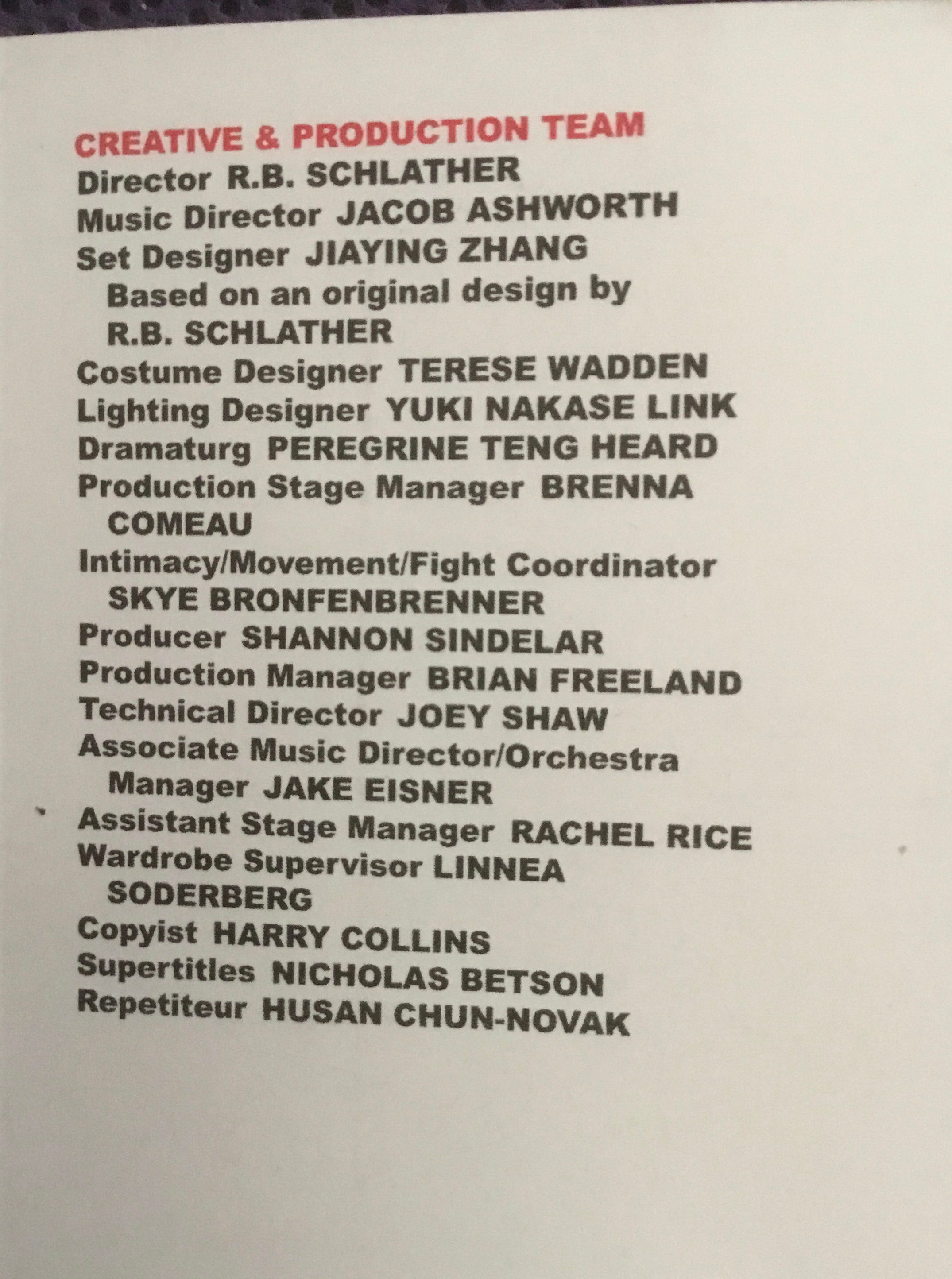
The 7 piece orchestra reduction works well and the conducting is vibrant and sensitive. The direction makes sensible use of the space, a black box theater sunk several levels into the basement, possibly the least ADA-compliant performing space in the city. Omigod those stairs! And the elevator was out of service.
The space was not spacious enough for some of the voices. The climax of the renowned quintet became a blur of vibratos. Vanessa herself, handicapped by jagged vocal writing that hurls words high above the staff, used the univowel to make herself heard but not always understood. There were subtitles, mercifully. Erika was absolutely terrific: firm, clear tone with every word projected. Anatol had a truly brilliant voice, but it needed more room to blossom.
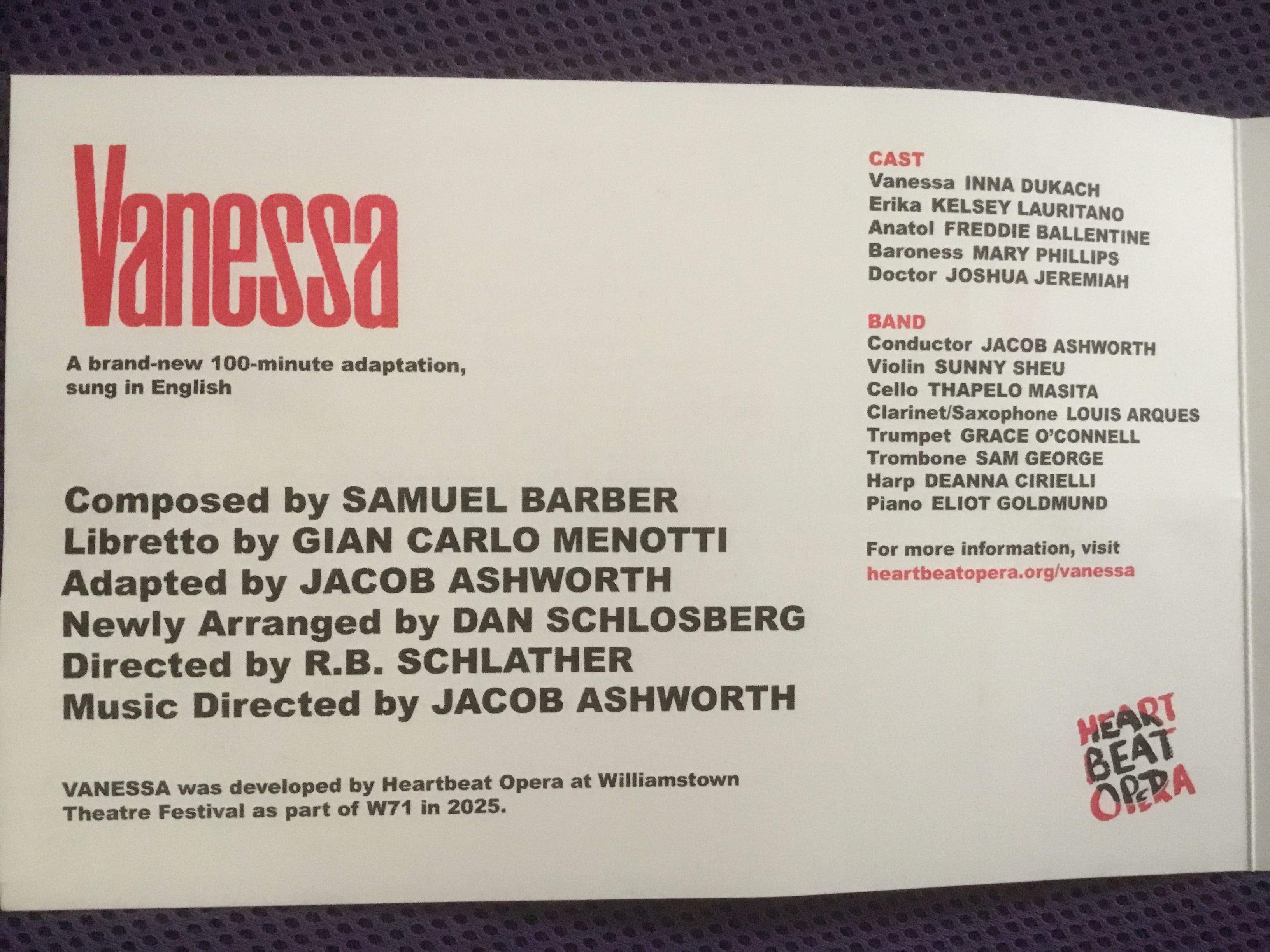
The opera has an unlikely plot with an improbable setting and a libretto full of ornate turns of phrase. Menotti never settles for one metaphor when three can be summoned up. The characters don’t offer much to empathize with. They gaslight themselves and others, denying things they instinctively know and wishing for what cannot be.
Vanessa’s delusion challenges compassion. Anatol is both a cad and a cipher. The doctor in this version has been demoted from eccentric to annoying drunk. The Baroness has one sympathetic scene with Erika before cutting her off, presumably for the same offense that caused the rift with Vanessa: failure to have a baby. Miscarriage? Abortion? Unclear, probably intentionally so. Erika is the heart of the opera. Maria Callas was offered the title role and refused, saying that Erika was the more interesting part. But even Erika makes choices that strain credulity: she waffles melodramatically about her feelings until Anatol marries the one who says yes.
The score (judiciously cut) veers between jagged backwards-looking (Strauss) and melodious backwards-looking (Puccini). My empathy goes to the creators of the opera, longing for an ethos that was already gone.
But then there is that quintet. A few minutes of such simple genius that the whole thing seemed worthwhile. And just as happened at the Met premiere the audience dispersed humming that descending sixth.