
Our Sherry

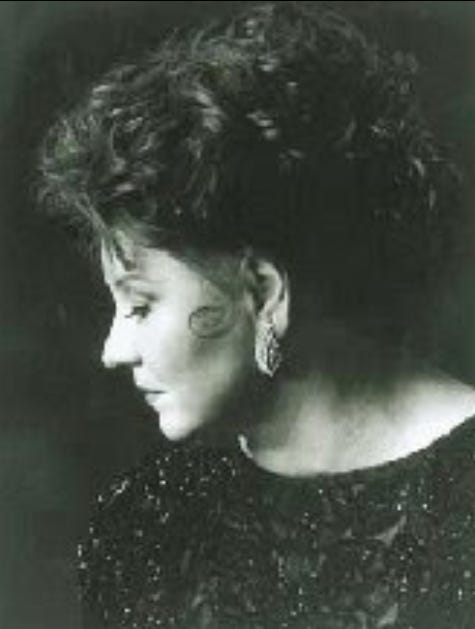
Sherry Zannoth died 12 years ago today. I started hearing about Sherry back when I was studying at New England Conservatory. Sherry had been the prize pupil of Helen Hodam, the renowned voice teacher who commuted for years between Oberlin, where she had taught Sherry some years earlier, and NEC, where I was her Saturday 11am lesson and then her ride to the airport. Years later Miss Hodam was a bond that Sherry and I shared: respect, admiration, frustration (at the ways our voices defied Miss Hodam’s method), and amusement (at Miss Hodam’s memorable mannerisms, which spark smiles of recognition decades later).
I actually met Sherry in the late ’90s when I sang a few times at Asti, the now long gone opera singer restaurant. By that time she had already been through City Opera, the Met, Germany, and the return to America and was cobbling together a typical singer’s life: dayjob, church, temple, and gigs. She was the definition of trouper, fierce and determined. Steve Vasta used to say that she could field any aria requested at Asti (where she was on the singing staff and had to deal with whatever the clientele wanted)—if somebody asked for Casta Diva or Voce di Donna (or the Death of Boris!) she’d ask for five minutes, study it at a table in the back, and then stand up and deliver it as promised! She truly lived to sing.
Shortly after that meeting I engaged her for the professional octet at the Synagogue where I used to conduct. We sang for the High Holy Days and at various other services and occasions. Sherry had a HUGE voice and faced the standard “dramatic soprano singing in a chorus” dilemma: sing soprano and stick out or sing alto and blend. She sang alto with me. There was an infamous tale about her being hired to sing chorus in the Beethoven Missa Solemnis, a work where her strong soprano range might be considered appropriate: after one rehearsal she was moved down into the alto section. One of the other singers joked that she could rejoin the soprano section, as long as she stood in the cafeteria!
She still did opera. I saw her twice in full length performances. She played Elektra at Christ and St Stephen’s Church, on the Sunday before 9/11. The events of that Tuesday have obliterated any detailed recollections I had! And I saw her as the Walküre Brunnhilde—my God how her posture evoked the warrior maiden!—at Riverside Church a few years later. Not only was she a riveting tragedy diva, she was an expert comedienne. I inveigled her (it didn’t take much asking) into a couple of Gilbert & Sullivan concerts at the NY G&S Society. She was totally hysterical as Lady Blanche in Princess Ida. Let’s face it: Sherry was a born stage animal, una creatura di palcoscenico, and she ate scenery for breakfast!
Singing at the Synagogue she rapidly became beloved. Her solos were highlights of any service she sang at. She owned the Janowski “Avinu Malkeinu.” So when she faced health challenges she found a wealth of support from people in the congregation.
Of course there had to be a small world story about Sherry: I was on tour with The Western Wind (the vocal sextet with whom I sang for 11 years) and we were giving a concert in Michigan. At the post-concert reception a woman walked up to me and said she was Sherry’s sister! We had a lovely chat.
There are a few Youtube clips of Sherry, from the earlier and central portions of her career. I have two more recent clips which I have uploaded, from a concert given in honor of the Cantor’s 25th anniversary with the Synagogue. The first is “Un bel di.” Sherry sang Butterfly over a hundred times, all over the world. The gestures were taught to her by a geisha. The fil di voce attack on the first phrase of the aria is magical. There is one point where she added more time than either the music or tradition allow, and it may have been an early hint of the trouble that was to come.
That trouble became more noticeable (to me) in the duet she sang (is “sang” the word for this style?) with star congregation member Fyvush Finkel, who also ate scenery for breakfast, even at the age of 87.
Sherry learned the scene for this occasion, and had a few difficulties with memorization—and finding the right octave—in the rehearsal. I was surprised. Sherry was a terrific and dependable musician and actress. But something was going wrong inside her and nobody knew. She did veer into the wrong stanza at one point but rescued herself like a pro and without a trace of anything the audience could pick up (unless they were checking the rhyme scheme!).
When Fall came—and the High Holy Days with it—Sherry was not herself. She was always a true diva, dressed and coiffed, holding herself with the air of total self respect. But her hair didn’t look quite right and her gait was off—and she was having trouble reading music. She said she would go see a doctor. She made it through the Selichot service. But on the day that Rosh Hashana began she left a message on my cell phone: “Richie,” (she was one of two people I allowed that liberty and don’t start!) “I’m in the ER, there’s a mass in my brain, and I don’t think they’ll let me out in time for the service this evening but I’ll make it tomorrow.” She had that kind of gumption! I stared at my cell phone, thinking, yeah, right, and rode up Third Avenue in a taxi while phoning substitute altos. From then on the choir became two gigs: the music we sang and the relationship with Sherry. Through the terrifying and tough process of her diagnosis and treatment (and her struggles with the health care system) we gave her emotional support and several doctors in the congregation steered her to medical options and solutions. We were but one spoke in the wheel of her relationships—the worlds of family, close friends, opera, church, students, and other regular gigs. We did what we could. And she bounced back. Miracle drugs gave her new life and she was right back up on the bima for High Holy Days the next year.
She made it through 2012 as well, though moving slowly and using a cane. Her year included on more Verdi Requiem, with Canterbury Choral Society. I found the recording years later at HousingWorks. She tore the roof off the place with the high C in the Libera Me. And for the Synagogue’s Yom Ha Shoah service I wrote her an arrangement of Eli, Eli: she ripped all our hearts out.
She sat throughout the High Holy Day services that year. The new Rabbi gave her a quizzical (but kindly) look at one point: I asked the Cantor to fill her in on all the history. This was Sherry’s last hurrah. I don’t know whether it was the strain of dragging herself through it all or the post-show letdown but she began a rapid decline immediately after Yom Kippur.
Our last time through that Avinu Malkeinu found her taking fermatas on practically every note. In rehearsal I asked her to stick to the rhythm a little more closely. She looked right at me with eyes that said THIS IS THE LAST TIME I’M DOING THIS AND I’M DOING IT MY WAY and I looked back with eyes that said of course you are. Words were not necessary.
I visited her in the hospice. She was still her peppery self…but bed-ridden like Violetta in La Traviata… and there was a Traviata score on the windowsill! Why was I not surprised? She was talking about getting better and someday singing Salome. That is the attitude that keeps you going!
Sherry asked me to do a duet program with her at a restaurant. But I was going through a rough patch with my voice and wanted to wait until I felt ready. I wasn’t ready in time and missed my chance. That I regret—but I am glad to have had a dozen years of working with, talking with, joking with such a down-to-earth yet exalted artist and human being.
Farewell dear! (and I hope when you call “Oh, nurse!” that they get it)
I enjoyed your tribute to Sherry. Did you know Hugh Anthony Moses--a baritone? He credits Sherry with getting him back on vocal track. He was the baritone ringer for my choir back at the Presbyterian Church of New Rochelle. Have a nice Thanksgiving!